
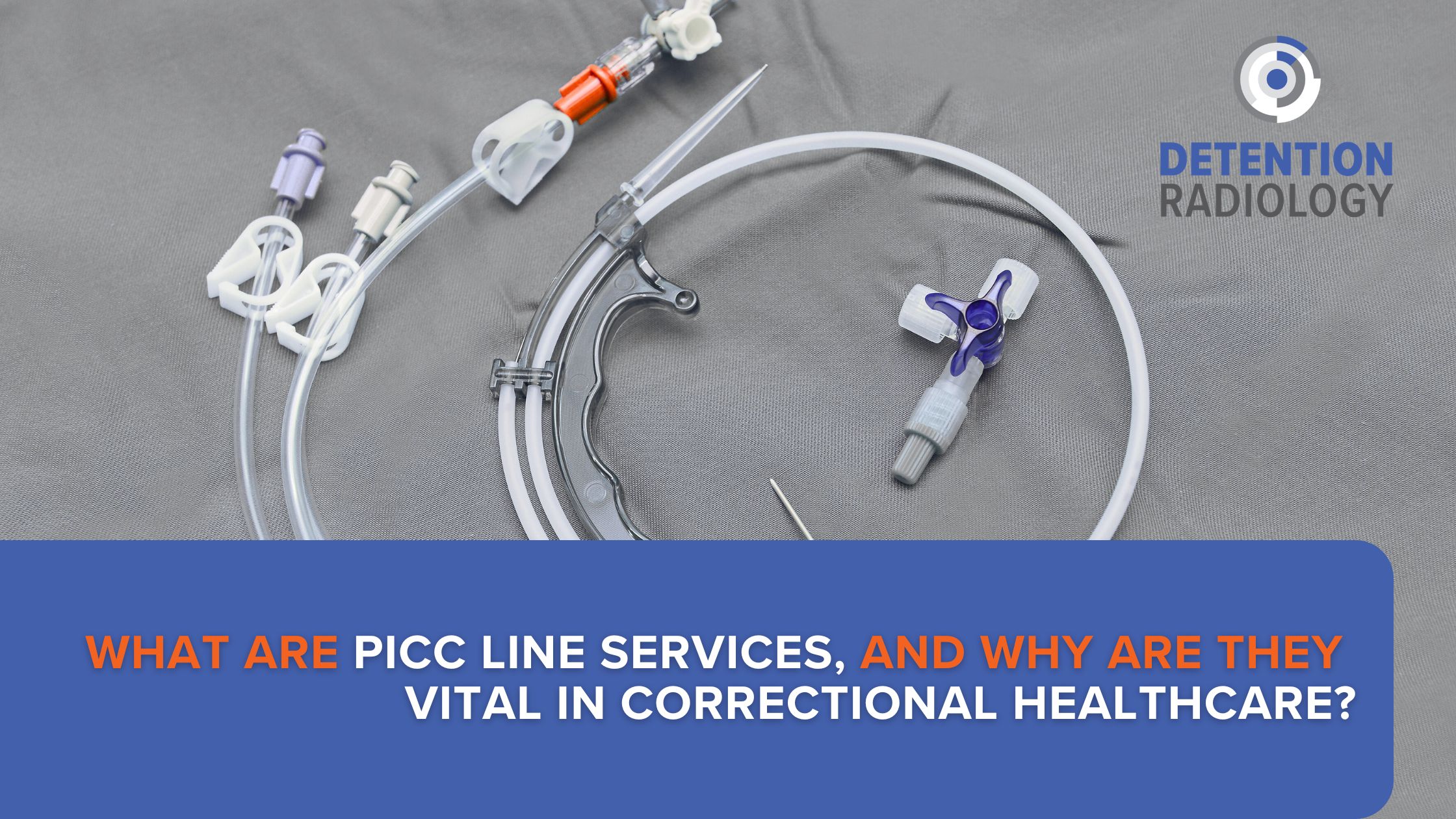
PICC Line Services in Correctional Healthcare
Correctional healthcare teams face a constant balancing act. They are responsible for delivering timely, effective medical care while navigating strict security protocols, staffing limitations, and compliance requirements. When incarcerated individuals require long-term intravenous treatment, that balance becomes even more difficult.
This is where PICC line services in correctional healthcare programs play a critical role.
Peripherally Inserted Central Catheter, or PICC, lines allow patients to receive extended IV therapy safely and efficiently. In correctional facilities, the method and location of PICC line placement matter just as much as the treatment itself. Transporting incarcerated individuals to outside hospitals introduces security risks, staffing strain, and compliance concerns.
On-site PICC line services in correctional healthcare offer a safer, more controlled alternative that supports both medical outcomes and operational efficiency. This article explains what PICC line services are, how they are used in correctional settings, and why on-site placement has become a vital component of modern correctional healthcare.
Understanding PICC Line Services in Correctional Healthcare
A PICC line is a long, flexible catheter inserted through a peripheral vein, typically in the upper arm, and guided into a central vein near the heart. Once placed, it allows medications, fluids, nutrition, and blood products to be delivered over weeks or months.
In correctional healthcare, PICC line services are often necessary for individuals requiring ongoing treatment that cannot be managed with short-term IV access.
Unlike standard IV lines, PICC lines reduce the need for repeated needle sticks, lower the risk of vein damage, and provide reliable access for complex therapies. When properly placed and monitored, they support consistent treatment without repeated hospital visits.
For detention centers, the challenge is not whether PICC lines are medically appropriate, but how and where they are placed.
Common Use Cases for PICC Line Services in Correctional Healthcare Facilities
Correctional populations experience higher rates of chronic illness, infectious disease, and complex medical conditions. PICC line services are commonly used to support treatment plans that require extended IV access.
Typical use cases include:
- Long-term antibiotic therapy for infections such as osteomyelitis or endocarditis
- IV hydration and electrolyte management for medically fragile individuals
- Chemotherapy or specialty medications requiring central access
- Total parenteral nutrition for patients unable to tolerate oral intake
Each of these treatments requires reliable vascular access over an extended period. Transporting incarcerated individuals off-site for repeated infusions or line management increases risk and cost, while also delaying care.
By bringing PICC line services directly into the facility, correctional healthcare teams maintain control over the environment, schedule, and security protocols.
Why On-Site PICC Line Services Matter for Correctional Operations
For administrators, Directors of Nursing, and medical teams, healthcare decisions are never purely clinical. Every decision affects staffing, safety, compliance, and cost.
On-site PICC line services address several operational pain points at once.
Reduced Transport Risk and Cost
Each off-site medical transport requires coordination between medical staff, correctional officers, and outside providers. These transports increase overtime, create security exposure, and divert staff from other critical duties.
On-site placement eliminates unnecessary movement, reducing both risk and expense.
Improved Continuity of Care
Delays in care often occur when scheduling outside appointments or waiting for hospital availability. On-site services allow facilities to align PICC line placement directly with treatment plans, improving outcomes and reducing interruptions.
Enhanced Staff Efficiency
When PICC line services are performed on-site, facility staff remain focused on patient care rather than logistics. Nursing teams can coordinate directly with on-site providers and maintain oversight throughout the process.
Greater Compliance Confidence
Correctional healthcare operates under intense regulatory scrutiny. On-site services help facilities document consistent care delivery while minimizing variables that complicate audits and inspections.
Facilities seeking stronger compliance frameworks often pair on-site clinical services with broader strategies outlined in resources such as this guide on how on-site imaging supports audit readiness:
https://detentionradiology.com/how-on-site-mobile-imaging-helps-meet-audit-requirements-in-correctional-facilities/
How Detention Radiology Supports Safe, Compliant PICC Line Services
Correctional healthcare teams are the heroes in this process. They carry the responsibility of delivering care under complex constraints. What they need is an experienced guide that understands both medicine and correctional operations.
Detention Radiology specializes in on-site diagnostic and clinical services designed specifically for correctional environments.
Their approach to PICC line services is built on four pillars: safety, compliance, efficiency, and collaboration.
Correctional-Specific Expertise
Unlike general healthcare providers, Detention Radiology understands facility workflows, security requirements, and documentation standards unique to correctional settings. Every procedure is performed with awareness of custody protocols and facility policies.
Strict Compliance Standards
PICC line services are delivered in alignment with HIPAA, DOJ, and NCCHC standards. Proper documentation, sterile technique, and clinical oversight are built into every step of the process.
On-Site Coordination with Facility Staff
Detention Radiology works alongside nursing and administrative teams to ensure procedures fit seamlessly into existing schedules and protocols. This collaboration reduces disruption and improves outcomes.
Integrated On-Site Imaging Support
Imaging plays a critical role in confirming accurate PICC line placement. On-site x-ray support allows verification to occur immediately, eliminating delays and unnecessary transfers.
Facilities can learn more about the full scope of services at https://detentionradiology.com/.
A Real-World Correctional Healthcare Scenario
Consider a detention center managing an incarcerated individual requiring six weeks of IV antibiotics following a serious infection. Without on-site PICC line services, the facility must schedule transport to an outside hospital for line placement, assign correctional officers for escort, and manage the risks associated with movement.
With on-site services, the PICC line is placed within the facility under controlled conditions. Imaging confirms proper placement immediately. Nursing staff coordinate care without disruption. Security exposure is minimized, and treatment begins without delay.
This is not just a clinical improvement. It is an operational win.
The Bigger Picture: Why PICC Line Services Are Becoming Essential
Correctional healthcare is evolving. Facilities are under increasing pressure to deliver hospital-level care while reducing cost, risk, and liability.
PICC line services and correctional healthcare programs reflect this shift. They represent a move toward smarter, more controlled care delivery that prioritizes safety for both patients and staff.
When combined with other on-site diagnostic services, PICC line placement becomes part of a larger strategy focused on efficiency, compliance, and quality care.
Key Takeaways for Correctional Healthcare Leaders
PICC line services are no longer a convenience. They are a necessity for facilities managing complex medical populations.
On-site PICC line placement helps correctional healthcare teams:
- Reduce transport-related risk and cost
- Improve continuity and timeliness of care
- Strengthen compliance and documentation
- Support staff efficiency and patient outcomes
With the right partner, facilities can deliver high-quality care without compromising security or operations.