
Hidden health issues are one of the most challenging aspects of correctional healthcare. Symptoms are not always clear, conditions can progress quietly, and delays in diagnosis can lead to serious complications.
For Directors of Nursing, administrators, and correctional healthcare teams, the responsibility is clear. Identify issues early, provide accurate diagnoses, and deliver care efficiently within a secure environment.
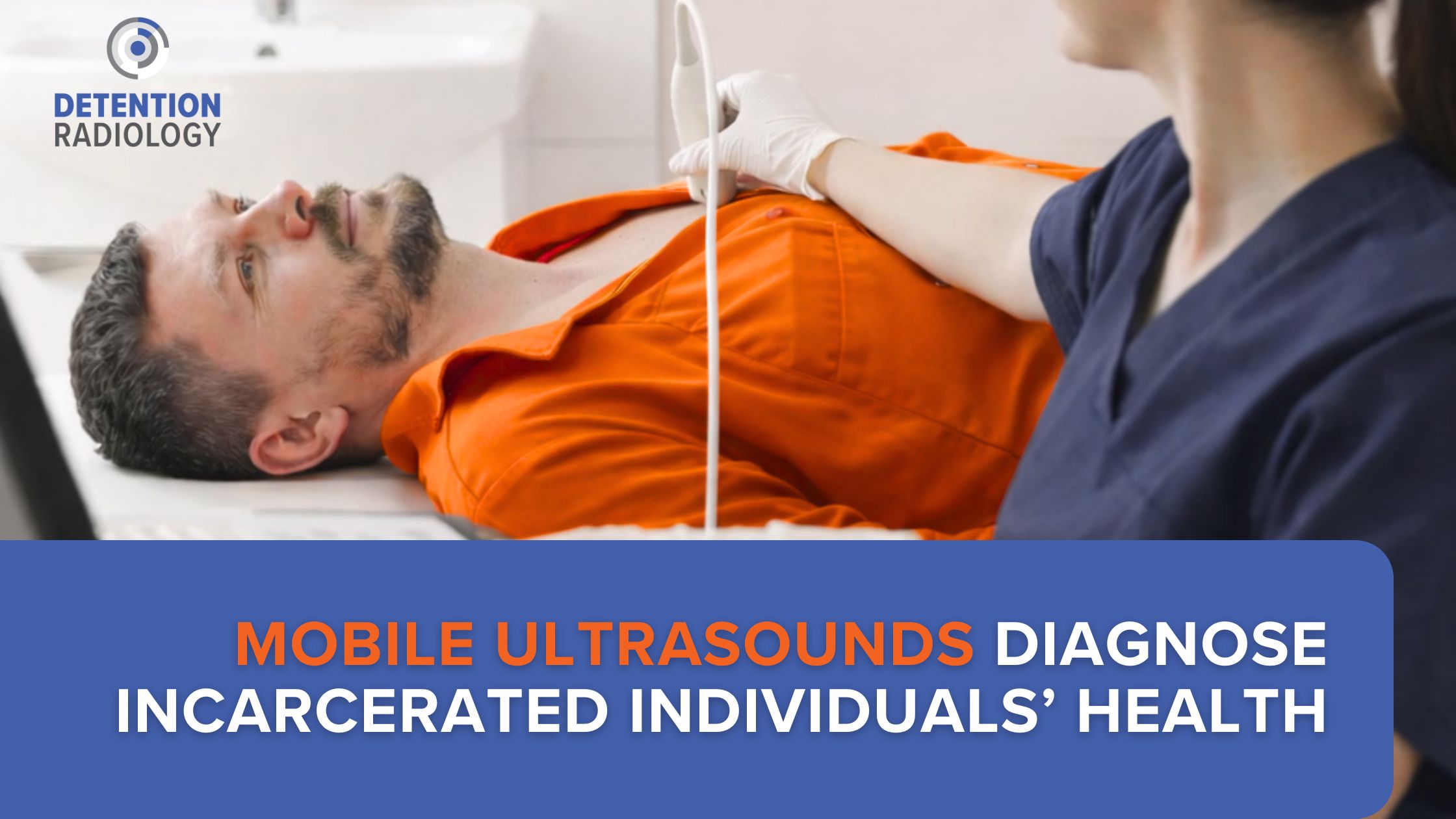
Mobile ultrasound services address the health challenges of incarcerated individuals by bringing advanced diagnostic tools directly into correctional facilities. With on-site imaging, healthcare teams gain faster answers, uncover hidden conditions, and improve outcomes without the need for transport.
You are the hero managing complex healthcare needs in a controlled environment. Detention Radiology serves as the guide, helping you implement reliable, compliant on-site ultrasound services that strengthen your entire care system.
Why Mobile Ultrasounds Diagnose Incarcerated Individuals’ Health More Effectively
Many health conditions do not present obvious symptoms in their early stages. Without access to timely diagnostic imaging, these issues can go undetected until they become more serious.
Correctional facilities face several barriers when it comes to identifying hidden health concerns.
Limited Access to Specialized Imaging
Ultrasounds are often required to evaluate internal organs, soft tissue, and vascular conditions. In many facilities, accessing these services requires off-site appointments, which can delay care.
Delayed Diagnosis Increases Risk
When imaging is postponed, conditions can worsen. What could have been a manageable issue may develop into a more complex and costly problem.
Operational Challenges
Transporting incarcerated individuals for diagnostic imaging introduces logistical challenges, security risks, and increased costs.
Mobile ultrasounds diagnose incarcerated individuals’ health needs by eliminating these barriers. On-site ultrasound services provide immediate access to diagnostics, allowing healthcare teams to act quickly and confidently.
Use Cases for Mobile Ultrasound Services in Correctional Facilities
Ultrasound technology is versatile and plays a critical role in both acute and chronic care within correctional facilities.
Abdominal and Organ Evaluation
Ultrasounds are commonly used to assess abdominal pain, liver conditions, kidney issues, and gallbladder concerns. These evaluations help identify problems that are not visible through physical examination alone.
Cardiovascular and Vascular Monitoring
Ultrasound imaging can detect blood flow issues, clots, and other vascular conditions. This is especially important for patients with chronic conditions such as hypertension or heart disease.
Soft Tissue and Musculoskeletal Concerns
Injuries or infections involving soft tissue can be evaluated with ultrasound. This allows healthcare providers to diagnose and treat issues without delay.
Acute Medical Situations
Ultrasounds are valuable in urgent situations where rapid diagnosis is needed. They provide immediate insight into internal conditions, supporting faster clinical decisions.
By integrating on-site ultrasound services, facilities can address a wide range of diagnostic needs without relying on external providers.
How Mobile Ultrasounds Diagnose Incarcerated Individuals’ Health and Uncover Hidden Issues
One of the greatest strengths of ultrasound technology is its ability to reveal conditions that are not immediately apparent.
Detecting Early-Stage Conditions
Ultrasounds can identify abnormalities in organs and tissues before symptoms become severe. Early detection allows for timely intervention and better outcomes.
Supporting Accurate Diagnoses
When symptoms are unclear, ultrasound imaging provides valuable data that helps healthcare providers determine the root cause of a condition.
Reducing Diagnostic Uncertainty
Without imaging, healthcare teams may need to rely on observation and trial treatments. Ultrasounds provide clarity, reducing guesswork and improving confidence in care decisions.
As highlighted in this resource on timely diagnostics, https://detentionradiology.com/the-importance-of-timely-diagnostics-in-correctional-facilities/, access to fast and accurate imaging is critical to improving outcomes and maintaining efficient operations.
Why On-Site Ultrasound Services Matter in Correctional Care
Mobile ultrasounds diagnose incarcerated individuals’ health more effectively because they align with the unique needs of correctional facilities.
Immediate Access to Diagnostics
On-site imaging eliminates the need to wait for external appointments. Healthcare teams can perform ultrasounds when needed, ensuring timely care.
Reduced Transport Risks
Keeping diagnostics within the facility minimizes the risks associated with incarcerated individuals’ transport. Staff maintain control of the environment, and security concerns are reduced.
Improved Workflow Efficiency
On-site ultrasound services streamline the diagnostic process. Scheduling, imaging, and follow-up all occur within the facility, reducing administrative burden.
Enhanced Compliance
Accurate imaging and documented results support compliance with healthcare standards and regulatory requirements. Facilities can demonstrate that they are providing appropriate and timely care.
Real-World Example of Ultrasound in Action
Consider a correctional facility where an inmate reports ongoing abdominal discomfort. Physical examination alone does not provide enough information to determine the cause.
Without on-site imaging, the facility would need to arrange transport to an external provider, delaying diagnosis and increasing risk.
With on-site ultrasound services, the process changes.
An ultrasound is performed within the facility. The imaging reveals an underlying condition that requires treatment. Healthcare providers can act immediately, improving the patient’s outcome and avoiding complications.
One healthcare provider shared:
“On-site ultrasound has made a significant difference in how we diagnose and manage patient care. We are able to identify issues earlier and provide treatment faster, which benefits both the patient and the facility.”
This example illustrates how mobile ultrasounds diagnose inmate health challenges in a practical and impactful way.
Strengthening Correctional Healthcare with On-Site Ultrasounds
Mobile ultrasounds diagnose inmate health while also improving the overall healthcare system within a facility.
Better Patient Outcomes
Timely and accurate diagnostics lead to earlier treatment and improved health outcomes for patients.
Increased Operational Efficiency
On-site imaging reduces the need for transport, simplifies workflows, and allows staff to focus on patient care.
Enhanced Collaboration
Medical and security teams can work together more effectively when diagnostic information is readily available.
Scalable Healthcare Solutions
Facilities can manage a wide range of conditions more efficiently, even with limited resources.
A Smarter Approach to Diagnostic Imaging
Correctional healthcare requires solutions that are both effective and practical. On-site ultrasound services meet these needs by providing reliable diagnostics within a controlled environment.
Detention Radiology specializes in delivering secure, compliant on-site imaging solutions tailored to correctional facilities. This expertise ensures that healthcare teams have the tools they need to diagnose and treat patients effectively.
Mobile ultrasounds diagnose inmate health in a way that supports both clinical excellence and operational efficiency.
The Future of Mobile Ultrasound Services in Correctional Facilities
As correctional healthcare continues to evolve, the demand for accessible, accurate diagnostics will grow. Facilities must find ways to deliver high-quality care while managing costs and maintaining security.
On-site ultrasound services are positioned to play a key role in this future. Advances in technology will continue to improve image quality, speed, and integration with healthcare systems.
Facilities that adopt these solutions are better prepared to meet the challenges ahead.
Take the Next Step Toward Better Diagnostics
You are responsible for delivering accurate, timely care in a complex environment. You need solutions that provide clarity, efficiency, and reliability.
Detention Radiology offers secure, compliant on-site ultrasound services designed specifically for correctional facilities. With a focus on mobile ultrasounds to diagnose incarcerated individuals’ health, your team gains the ability to uncover hidden conditions and improve outcomes.
Get started today:
https://detentionradiology.com/CONTACT/