
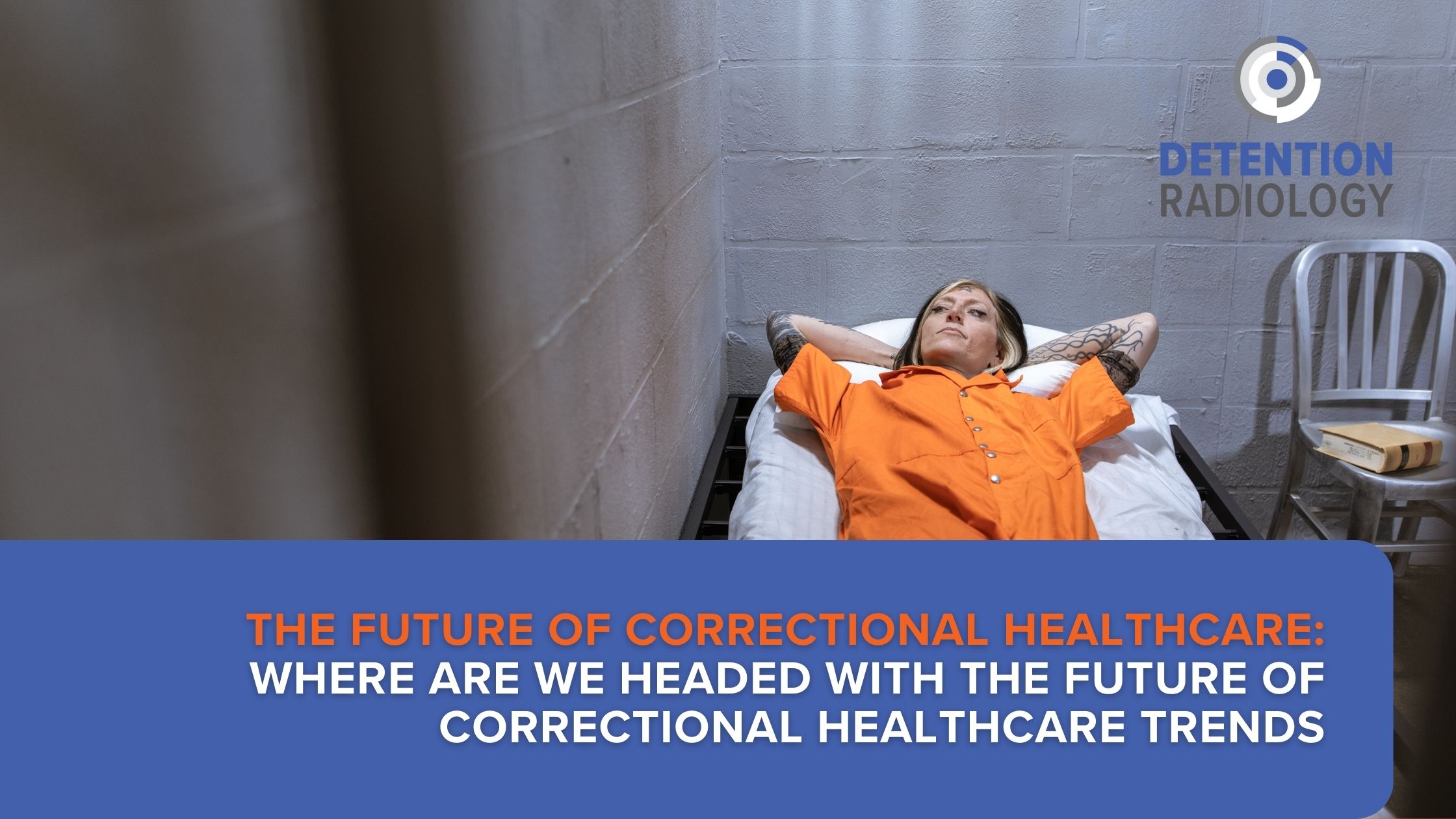
The Future of Correctional Healthcare Trends
Each new year brings a clearer picture of how correctional healthcare is evolving, and the momentum is stronger than ever. Facilities across the country are navigating rising medical demands, tighter budgets, and greater expectations for security and compliance. These challenges shape the future of correctional healthcare trends and determine how prisons and jails deliver care.
Correctional healthcare professionals are the heroes of this story. Directors, physicians, and nursing leaders work continuously to manage complex clinical needs within restrictive operational environments. Detention Radiology serves as the guide, supporting these teams with tools, insights, and services that strengthen the entire medical workflow.
As we look toward the future, it is clear that technology, telemedicine, and on-site imaging are becoming central components of secure, efficient, and compliant correctional health operations. This article explores the key trends shaping the industry and how Detention Radiology is innovating to support this new era.
For additional insights on evolving correctional health strategies, visit our related article at
https://detentionradiology.com/trends-in-correctional-healthcare-in-2025/
Key Emerging Trends Leading the Future of Correctional Healthcare
Correctional health is rapidly transforming from reactive treatment to proactive care coordination. These shifts are driven by new technology, updated regulatory expectations, and the growing demand for streamlined medical processes.
Trend 1: Increased Adoption of Telemedicine
Telemedicine is one of the most influential trends reshaping correctional healthcare. It reduces transports, accelerates clinical decision-making, and gives medical teams access to specialists who may be unavailable locally.
Telehealth platforms now support:
- Primary care consultations
- Behavioral health services
- Medication management
- Chronic condition follow-ups
A correctional medical director shared,
“Telemedicine allows us to connect inmates with specialists in minutes instead of waiting weeks for an outside appointment with transport.”
Trend 2: On-Site Imaging Becomes the Standard
As imaging technology becomes more mobile and secure, more correctional facilities are replacing off-site transport with on-site imaging. This shift allows teams to complete X-rays, ultrasounds, and specialized diagnostic studies within hours, not days.
This aligns with the trend outlined in our article on the future of secure screenings at
https://detentionradiology.com/trends-in-correctional-healthcare-in-2025/
Facilities that adopt on-site radiology experience:
- Faster diagnostics
- Fewer transports and overtime hours
- Reduced security risks
- Improved continuity of care
On-site X-rays and ultrasound services are transforming correctional care by meeting clinical needs without disruption to facility operations.
Trend 3: Data-Driven Decision Making
Correctional healthcare is becoming more data centered. Facilities are using digital tools to track patient history, imaging trends, compliance benchmarks, and operational performance.
Digital integration supports:
- Better population health management
- Early detection of chronic conditions
- More accurate reporting during audits
- Improved communication between medical teams and administrators
Data is becoming an operational asset rather than an afterthought.
Trend 4: Emphasis on Compliance and Documentation
Regulatory requirements for correctional health continue to grow. Standards from HIPAA, NCCHC, and DOJ encourage consistency, transparency, and documented processes.
Facilities now prioritize:
- Secure digital reporting
- Documented imaging workflows
- Protected health information protocols
- Systems that ensure audit-ready compliance
On-site imaging supports compliance by centralizing all radiology documentation within the facility rather than relying on external clinics.
The Role of Technology in the Future of Correctional Healthcare
The most impactful future of correctional healthcare trends center around technology that increases efficiency while reducing operational burden.
How Technology Supports Medical and Security Goals
Correctional facilities benefit from technology that:
- Shortens response times
- Minimizes inmate movement
- Strengthens communication
- Protects medical privacy
- Enhances clinical accuracy
Modern correctional healthcare relies on tools that integrate seamlessly with secure workflows rather than disrupt them.
Innovations in Telemedicine Infrastructure
Facilities are increasing their bandwidth, adopting secure video platforms, and connecting directly with remote providers. These upgrades allow medical teams to treat more conditions on-site rather than transporting patients for basic appointments.
Advanced Digital Radiology Systems
On-site radiology now uses:
- Portable digital X-ray
- Handheld ultrasound equipment
- Cloud-based image reporting
- Secure EMR integration
These tools allow medical providers to receive images and reports quickly, reducing delays in treatment.
How On-Site Imaging Supports the Future of Correctional Healthcare
On-site imaging services are one of the fastest-growing components of modern correctional health. This rise is driven by three core advantages: operational efficiency, clinical quality, and security.
Efficiency: Same Day or Rapid Imaging
When a provider orders an X-ray or ultrasound, waiting several days for an off-site appointment can delay diagnosis and treatment. With on-site imaging, facilities can receive results the same day, allowing clinical decisions to occur quickly and accurately.
Security: No Transport Required
Eliminating transport reduces:
- Staff overtime
- Vehicle allocations
- Inmate exposure to external environments
- Risk of escape or incidents
Security teams remain focused on internal operations rather than external escorts.
Clinical Quality: Better Outcomes Through Immediate Access
With consistent imaging access, providers can:
- Monitor injuries
- Evaluate chronic conditions
- Confirm fractures or respiratory issues
- Support intake screenings
On-site diagnostics create a reliable foundation for timely, effective medical care.
How Detention Radiology Is Innovating in the Future of Correctional Healthcare Trends
Detention Radiology is committed to advancing correctional healthcare by bringing essential imaging services directly inside secure facilities.
What Sets Detention Radiology Apart
Our team delivers:
- On-site X-ray and ultrasound
- Echocardiograms
- Foreign body imaging
- IV therapy and hydration support
- PICC line insertions
- Emergency and same day services
- Radiology staff trained specifically for correctional environments
- Secure and compliant reporting workflows
Every service aligns with correctional safety protocols and clinical needs, supporting the long-term transformation of secure medical care.
Facilities that partner with Detention Radiology experience measurable improvements in efficiency, cost reduction, and clinical responsiveness.
Learn more at https://detentionradiology.com/.
Conclusion: The Future of Correctional Healthcare Is Faster, Smarter, and More Secure
As telemedicine advances, on-site imaging expands, and digital workflows improve, correctional healthcare is becoming more efficient, more compliant, and easier for medical staff to manage. The future of correctional healthcare trends points toward improved access to care without sacrificing security or operational stability.
Correctional healthcare leaders drive this progress every day. Detention Radiology stands alongside them, providing the tools and support needed to continue moving forward.
To explore the next steps for your facility, visit https://detentionradiology.com/.