
Understanding mobile imaging vs in-house radiology prisons
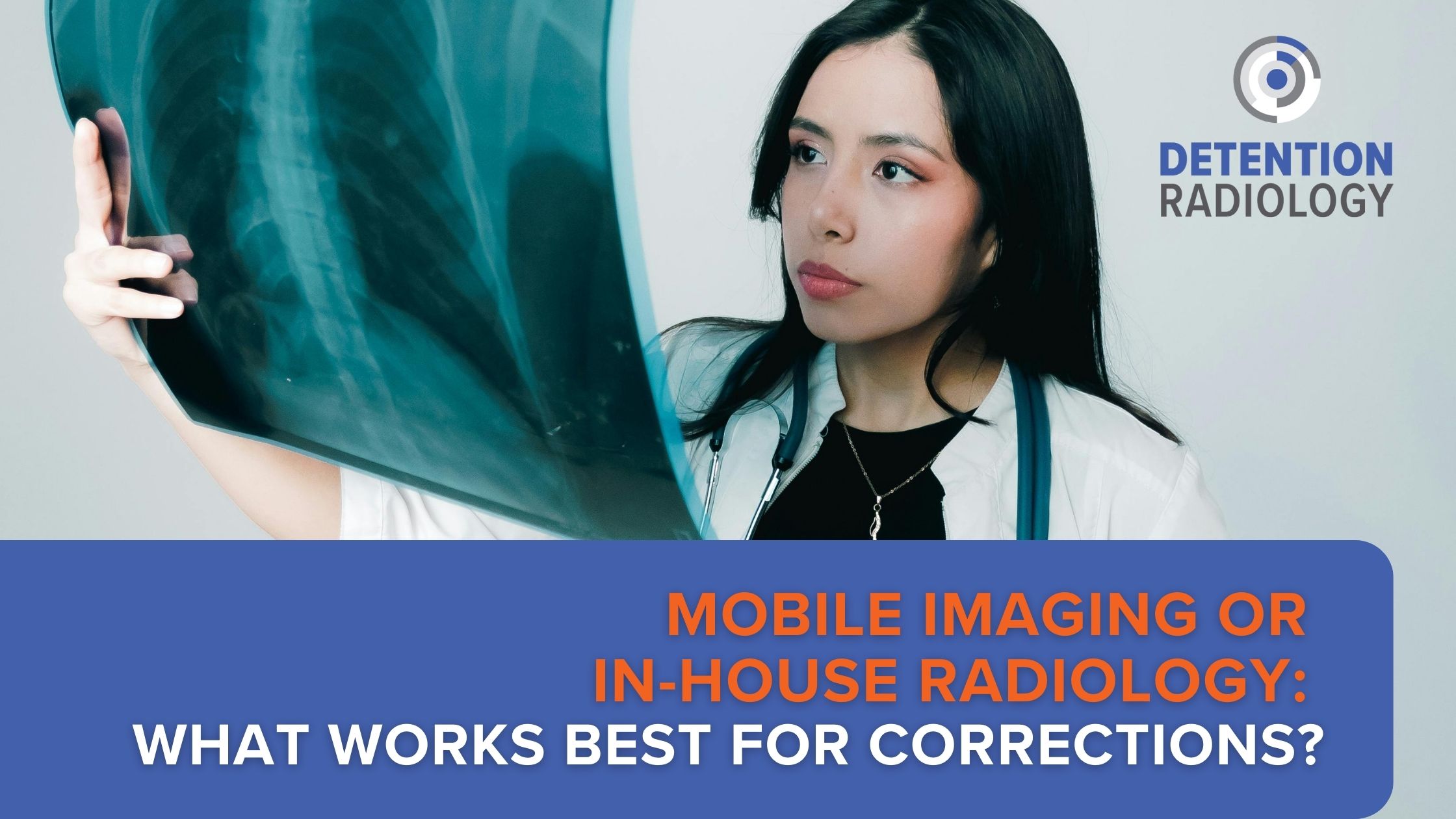
Correctional healthcare teams must balance two critical responsibilities. They must deliver timely medical care for incarcerated individuals and uphold strict security and operational requirements. X-rays, ultrasounds, echocardiograms, and other diagnostic studies are essential, yet providing them inside a secure environment can be a significant challenge.
This leads many correctional leaders to ask an important question:
Should we invest in in-house radiology equipment or rely on on-site imaging services that come directly to the facility?
Understanding the true differences in cost, staffing, scalability, and efficiency is essential when evaluating mobile imaging vs in-house radiology in prisons. Detention Radiology supports correctional healthcare teams nationwide with solutions designed specifically for secure facilities.
This article compares the two approaches, highlights benefits and pitfalls, and explains why many prisons now choose professional on-site imaging partnerships over building internal radiology departments.
To further explore operational advantages of on-site diagnostic services, review our related article at
https://detentionradiology.com/the-role-of-mobile-x-rays-in-inmate-health-screenings-improving-efficiency-and-outcomes/
The Key Differences in Mobile Imaging vs In-House Radiology for Prisons
Radiology services in correctional facilities must satisfy clinical needs and security protocols, which creates unique challenges compared to hospitals or outpatient clinics. When comparing mobile imaging vs in-house radiology prisons, the major considerations are cost, scalability, staffing, and operational impact.
Cost Comparison: In-House Radiology Is Expensive to Build and Maintain
Establishing an internal radiology department requires a large capital investment. Facilities must purchase equipment, remodel infrastructure, and maintain strict safety standards. Costs often include:
- Diagnostic equipment purchases
- Lead-lined room construction
- Radiation safety compliance
- Ongoing preventive maintenance
- Software, PACS systems, and IT support
- FTE radiologic technologists and support staff
Even for large prisons, these expenses are difficult to justify when imaging needs fluctuate daily or weekly.
By contrast, on-site imaging eliminates upfront capital costs. Facilities pay only for the studies they need, when they need them, with no equipment ownership or long-term maintenance requirements.
A correctional healthcare administrator recently shared,
“We evaluated the cost of building out an internal X-ray room, and the numbers made the decision for us. On-site imaging was a fraction of the cost and far more flexible.”
Scalability: On-Site Imaging Supports Growth Without Heavy Investment
Prison populations change. Intake levels shift. Medical conditions vary. In-house radiology systems cannot easily scale up or down without additional cost or staffing.
On-site imaging provides immediate scalability because the facility only requests services as needed. Whether a prison needs two studies per week or thirty, the partner adjusts without operational burden on the facility.
Detention Radiology’s teams deliver services with quick turnaround times, allowing facilities to respond to health needs without delays, even during high-volume periods or emergencies.
Efficiency: On-Site Imaging Removes Delays and Reduces Security Risks
Transporting inmates off-site for imaging is one of the most resource-intensive tasks in correctional healthcare. With on-site services, facilities eliminate:
- Transport vehicles
- Escort officer allocation
- Public exposure risks
- Lost staff hours
- Emergency delays
This aligns with the efficiency gains described in Detention Radiology’s correctional screening insights, outlined at
https://detentionradiology.com/the-role-of-mobile-x-rays-in-inmate-health-screenings-improving-efficiency-and-outcomes/
When imaging occurs directly inside the facility, medical teams receive results faster, and security teams stay focused on critical internal operations. Efficiency improves on both sides of the mission.
Why Many Prisons Choose Outsourced On-Site Imaging Instead of In-House Radiology
After comparing mobile imaging vs in-house radiology prisons, many administrators find that outsourcing provides the most reliable, cost-effective, and operationally secure solution.
Benefit 1: No Staffing Concerns
Hiring, training, and retaining radiologic technologists in correctional environments is difficult. With on-site imaging, Detention Radiology provides qualified professionals who understand secure facility workflows.
Benefit 2: Predictable Costs
Budgets matter. On-site services offer straightforward pricing with no maintenance fees, equipment repairs, or staffing overhead.
Benefit 3: Better Compliance and Documentation
Detention Radiology ensures HIPAA, DOJ, and NCCHC compliance with modern imaging workflows and secure record exchange.
Benefit 4: Faster Access to Diagnostic Data
Radiologists interpret studies quickly and send reports to the facility medical team through secure channels.
Benefit 5: No Infrastructure Upgrades Needed
Prisons do not need construction projects, radiation shielding, or IT installations to begin imaging services.
A Director of Nursing explained,
“The flexibility and reliability of on-site X-ray gave us capabilities we could never match with an in-house setup. It immediately boosted our ability to care for our population.”
Case Examples: How On-Site Imaging Improves Prison Operations
Facilities that adopt on-site imaging quickly notice significant improvements in both clinical care and operational efficiency.
Case Example: Reduced Delays and Faster Medical Decisions
A prison in the Midwest reported that imaging turnaround times dropped from days to hours after partnering with Detention Radiology. With quicker results, physicians modified treatment plans in real time.
Case Example: Lower Transport Costs
By eliminating weekly off-site imaging transports, a southern detention center saved more than forty staff hours per month. Overtime decreased, and internal coverage improved.
Case Example: Better Intake Screening
A large facility used on-site X-rays to perform rapid intake screenings for tuberculosis and other concerns. The process became more accurate and more secure than sending new intakes to external clinics.
These examples reflect a consistent truth: on-site imaging improves care while supporting operational control.
Detention Radiology: Tailored Solutions for Correctional Healthcare
Correctional leaders want a trusted partner who understands the specialized needs of secure environments. Detention Radiology fills this role by bringing advanced diagnostic services directly to the facility.
Our services include:
- On-site X-ray
- On-site ultrasound
- Echocardiograms
- Foreign body imaging
- PICC line insertions
- IV therapy and hydration support
- Emergency and same-day availability
We design every service with correctional healthcare professionals in mind, ensuring safety, reliability, regulatory compliance, and seamless communication.
Learn more at https://detentionradiology.com/.
Conclusion: On-Site Imaging Is the Most Efficient Choice for Prisons
While in-house radiology may appear beneficial at first glance, the demands of staffing, equipment, security, and cost make it impractical for most correctional facilities. When comparing mobile imaging vs in-house radiology prisons, on-site imaging emerges as the more scalable, cost-effective, and operationally efficient solution.
Detention Radiology supports correctional healthcare teams by delivering high quality imaging directly inside the facility, helping staff provide timely care while maintaining full control of security and workflow.
Explore how on-site imaging can support your facility today at https://detentionradiology.com/.